Enhancing TIG Welding Performance with Ceramic Backing Solutions
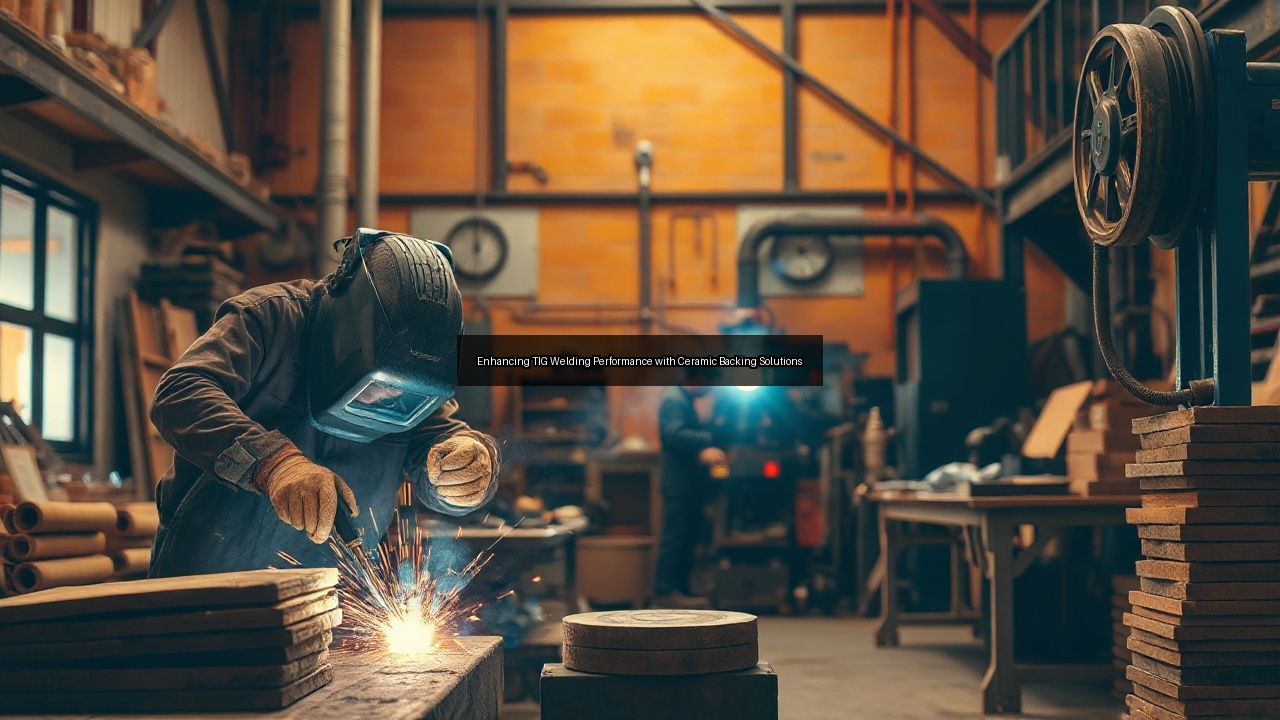
Introduction to TIG Welding and Ceramic Backing Solutions
Overview of TIG Welding
TIG welding delivers precise control over the weld pool through a non-consumable tungsten electrode and inert gas shielding. Welders rely on argon to protect the molten metal from oxygen contamination during the process. This technique suits thin sections of stainless steel, aluminum, and other alloys where clean, high-integrity joints matter most. A welder adjusts amperage and travel speed while feeding a welding rod to maintain consistent bead formation. The method avoids spatter and produces narrow heat-affected zones that preserve base metal properties. Many fabricators combine TIG with ceramic weld backing to support the root pass and eliminate the need for back-side access. Proper setup includes a stable work surface and clean tungsten tip to sustain arc stability across long seams.
Importance of Weld Backing in TIG Processes
Weld backing supports the root bead and prevents burn-through on open joints. Without it, welders often grind the back side or use temporary fixtures that add time and cost. Ceramic weld backing creates a stable platform that shapes the root and contains the molten pool. This support allows higher travel speeds while maintaining full penetration. Fabricators report fewer defects such as lack of fusion or porosity when they apply ceramic backing strips or tapes. The material withstands arc temperatures without melting or releasing gases that could affect the weld. Shops that standardize on weld backing reduce rework and improve consistency across production runs.
Introduction to Ceramic Weld Backing
Ceramic weld backing consists of high-temperature ceramics formed into strips or tapes that sit behind the joint. These products replace metal backing bars or flux in many TIG applications. The ceramic material resists thermal shock and maintains its shape under direct arc exposure. Welders position the backing with adhesive or mechanical clamps to ensure intimate contact with the plate edges. Once the weld cools, the backing peels away cleanly without leaving residue. Manufacturers produce ceramic weld backing from refined clay that yields dense, low-porosity structures. This solution fits both manual and mechanized TIG setups and supports single-sided welding on pipes, tanks, and structural components.
Types of Ceramic Weld Backings
Ceramic Backing Strips
Ceramic backing strips come in rigid lengths that welders align along straight seams or plate edges. The strips feature a grooved profile that molds the root bead into a uniform reinforcement. Most versions measure several millimeters thick and provide thermal insulation that slows heat dissipation into the surrounding metal. Fabricators cut the material with a wheel or score it for custom lengths. Strips perform well on flat or gently curved surfaces where rigid support prevents sagging of the weld pool. Users often pair them with fiber gaskets for improved sealing on irregular joints. The dense ceramic composition withstands multiple passes before replacement becomes necessary.
Ceramic Backing Tapes
Ceramic backing tapes offer flexibility for contoured or out-of-position welds. The tape adheres directly to the back side of the joint and conforms to pipes, tanks, and complex geometries. Manufacturers embed ceramic particles in a fiberglass matrix that burns away cleanly after welding. Welders unroll the tape and press it into place, eliminating the need for clamps on many applications. The thin profile allows use in tight spaces where rigid strips would not fit. Ceramic backing tape maintains root support even when the assembly rotates during welding. Shops stock different widths to match joint preparations ranging from square butt to V-groove configurations.
Comparison of Ceramic and Other Backing Materials
Ceramic weld backing outperforms copper, steel, and flux-coated alternatives in several key areas. Metal backings conduct heat away rapidly and can distort thin sections, while ceramic materials insulate the weld and reduce distortion. Flux tapes release fumes and require post-weld cleaning that ceramic products avoid. Welders note that ceramic backing strips and tapes leave no metallic inclusions that could initiate corrosion. Cost comparisons favor ceramics for high-volume work because one set of strips often lasts through dozens of joints. The non-conductive nature of ceramics also prevents arc wander that sometimes occurs with foil or metal shims. Overall, the switch from traditional backings to ceramic weld backing improves both quality and productivity.
Benefits of Using Ceramic Weld Backing
Enhanced Weld Quality
Ceramic weld backing produces smooth, fully penetrated root beads without undercut or excessive reinforcement. The consistent support reduces the likelihood of porosity caused by trapped gases. Welders achieve better sidewall fusion because the backing forces the arc to focus on the joint edges. Visual inspection becomes simpler since the root face remains accessible only from one side yet displays uniform appearance. Mechanical testing shows higher tensile strength and ductility in joints completed with ceramic backing compared with open-root techniques. Shops that document results report fewer radiographic rejections after adopting these products.
Improved Heat Management
The low thermal conductivity of ceramics slows heat flow away from the weld zone. This controlled cooling rate minimizes hardening in the heat-affected zone of alloy steels. Welders maintain steadier arc lengths because the backing does not draw current or create magnetic interference. Reduced heat sink effect allows lower amperage settings that preserve tungsten life. In thick sections, ceramic weld backing permits controlled interpass temperatures without additional preheat blankets. Fabricators record fewer cracks in restrained joints when they use ceramic products instead of metal bars that accelerate cooling.
Reduction of Oxide Formation
Properly placed ceramic weld backing limits exposure of the root to atmospheric oxygen. The barrier effect supplements the argon shield and prevents sugaring on stainless steel. Welders observe brighter, cleaner root surfaces that require minimal pickling or passivation afterward. The dense ceramic structure does not outgas during heating, so it avoids introducing additional oxygen into the weld environment. This advantage proves especially valuable in food-grade and pharmaceutical piping where oxide inclusions create contamination risks. Consistent use of ceramic backing tape reduces post-weld cleaning time and associated labor costs.
Applications of Ceramic Weld Backing in Industry
Use in Aerospace Welding
Aerospace manufacturers apply ceramic weld backing on titanium and nickel alloy components where weight and integrity are critical. The material supports thin skins and stringers during TIG welding without adding fixtures that could mar finished surfaces. Engineers specify ceramic backing strips for engine mounts and fuselage frames to achieve full penetration without backside grinding. Clean welds reduce the need for chemical milling or additional surface treatments. Production records show improved first-pass yield rates when teams standardize on ceramic products from established suppliers.
Applications in Automotive Manufacturing
Automotive plants use ceramic backing tape on exhaust manifolds and chassis subassemblies. The flexible tape conforms to tubular sections and allows robotic TIG cells to weld without repositioning the part. Reduced distortion keeps tolerances tight on suspension brackets and fuel tanks. Welders appreciate the elimination of copper backing shoes that previously required frequent replacement due to wear. Ceramic weld backing also supports aluminum body panels where oxide control remains essential for corrosion resistance. Line speed increases because operators spend less time on root preparation and cleanup.
Ceramic Backing in Pipeline Construction
Pipeline crews employ ceramic backing strips on field tie-in welds for both onshore and offshore lines. The rigid support enables one-sided welding of large-diameter pipes where internal access is impractical. The material withstands wind and weather during outdoor operations. Welders achieve consistent root profiles that meet API and ASME code requirements without internal grinding. Ceramic products also perform reliably on CRA clad pipelines where metal backing would risk dilution and corrosion issues. Project managers note lower overall welding time when crews switch from traditional methods to ceramic weld backing solutions.
Selecting the Right Ceramic Backing Solution
Factors to Consider: Thickness and Material
Thickness selection depends on plate thickness and joint preparation. Thicker ceramic backing strips suit heavy sections that generate larger weld pools, while thin tapes work best on sheet metal. Material density affects thermal performance; higher-density ceramics provide longer service life but may require more precise fit-up. Welders evaluate groove angle and root gap before choosing between strips and tapes. Compatibility with the base metal chemistry ensures no adverse reactions during welding. Shops test sample joints to verify that the chosen ceramic weld backing produces acceptable macro sections before full production.
Popular Brands: ESAB and Gullco International
ESAB offers a range of ceramic backing products engineered for consistent performance across manual and automated TIG applications. Their strips feature uniform grooving that produces repeatable root reinforcement. Gullco International supplies both ceramic backing tape and rigid strips along with handling equipment that speeds placement on large assemblies. Users value Gullco International’s attention to edge sealing that prevents gas leakage during welding. Both brands provide technical data on maximum temperature ratings and recommended joint designs. Fabricators often standardize on one supplier to simplify inventory and training across multiple work sites.
Integration with Welding Equipment and Techniques
Successful integration begins with proper positioning of the ceramic weld backing relative to the joint centerline. Welders align the groove with the expected root bead location and secure the material to avoid movement during arc initiation. Automated systems from Gullco International and ESAB include guides that maintain consistent pressure against the plate. Parameter adjustments include slightly higher travel speeds and controlled wire feed to match the thermal mass of the backing. Post-weld removal involves simple peeling or light scraping that leaves the weld face ready for inspection. Training programs emphasize fit-up tolerances that maximize the benefits of ceramic backing in production environments.